What Do Weather Shocks Reveal? Realized Temperature Variability and Equity Returns
Best Data-Driven Research Award 2022, Edinburgh Centre for Data, Culture & Society
Abstract
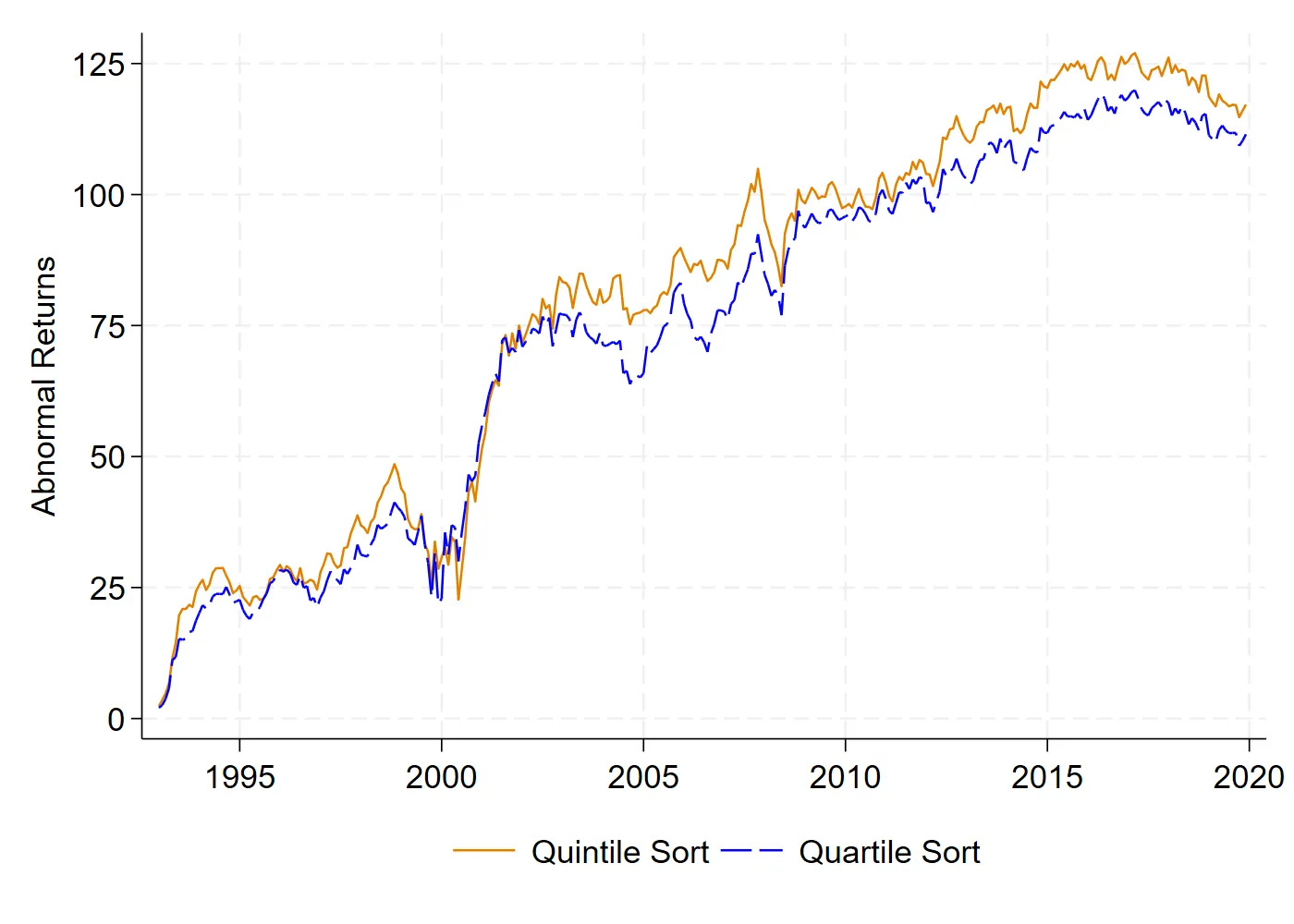
We study how US equities respond to abnormal temperature variability — a localized and transitory shock with significant firm-level consequences. Sorting US firms each month by realized exposure in their operating states, we find that low-exposure firms have contemporaneously greater returns than high-exposure firms, with a return differential of 4.8% annually. Firm-level evidence supports a cash-flow channel, as elevated variability reduces revenues and profits. Consistent with these operating consequences, household spending falls in affected consumer-facing sectors, and workers supply fewer hours. These shocks attract attention as they occur, yet their cash-flow implications are difficult for investors to infer. Analyst disagreement rises and earnings surprises are more negative among high-exposure firms.
Overview
Average warming is only part of how climate change touches the economy: temperature has also become more erratic. We measure firms’ monthly realized exposure to abnormal temperature variability in the states where they operate and trace its consequences for returns, cash flows, household spending, and labour supply. The shocks attract attention when they occur, but their cash-flow implications are hard for investors to infer in real time.
An earlier version circulated as “Volatile temperatures and their effects on equity returns and firm performance”, which received the Best Data-Driven Research Award from the Edinburgh Centre for Data, Culture & Society.
Presentations
- Financial Stability Workshop, Federal Reserve Board
- Yale Initiative on Sustainable Finance
- Southern Finance Association
- Columbia University Sustainable Development Seminar
- Climate Econometrics series
- Commodity and Energy Markets Association Annual Meeting
- Global Research Alliance for Sustainable Finance and Investment
- Institute for Quantitative Investment Research
- European Economic Association
- Frontiers of Factor Investing