Atreya Dey | University of Cambridge

Research

Working papers and ongoing projects. Concise summaries are shown by default; expand an entry for the full abstract.

Working papers

  • Biodiversity
  • Asset Pricing
  • Geospatial Data

A bird's-eye view: firm biodiversity footprints and earnings expectations

Working paper · Job market paper · Draft: July 2026

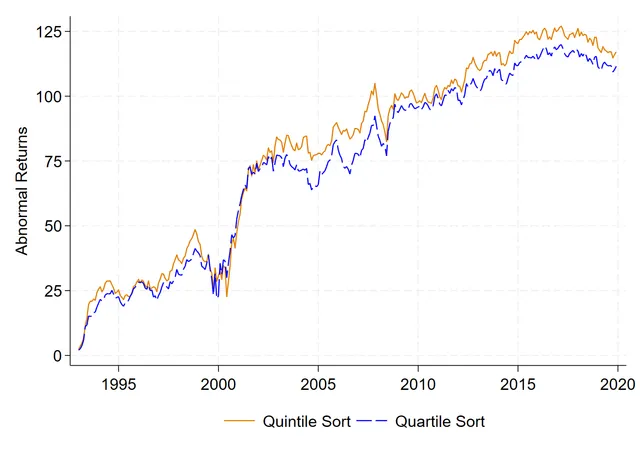
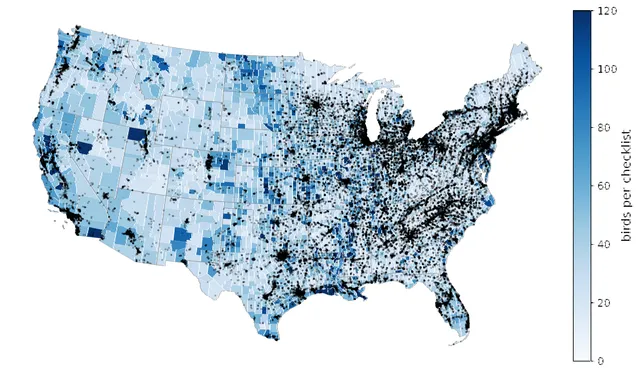
Using bird-watching data matched to U.S. industrial facilities, I show that facility construction causally reduces local bird populations and species, and I build a firm-level biodiversity footprint index from these estimates. Firms with large footprints face persistently higher production costs, which investors initially misread as operational decline. The resulting pessimism corrects around earnings announcements, generating predictable returns.

Best PhD Paper Award, Global Research Alliance for Sustainable Finance and Investment 2025 (for an earlier version)

Abstract

Using bird-watching data matched to U.S. industrial facilities, I show that firms causally reduce bird populations and species. I use these estimates to construct a firm-level biodiversity footprint index that identifies firms with many ecologically consequential facilities relative to their size. Sorting on the footprint generates significant abnormal returns among small- and mid-cap firms from 1988 to 2024. The return premium reflects forecast errors: investors misinterpret the higher production costs of high-footprint firms as operational decline, and their pessimism corrects when earnings are announced. Although firms' facility locations are public, firms with larger biodiversity footprints provide less voluntary biodiversity information.
  • Climate Finance
  • Sovereign Risk
  • Geospatial Data

Inattention to the coming storm? Rising seas and sovereign credit risk

Working paper · Last revised: February 2025

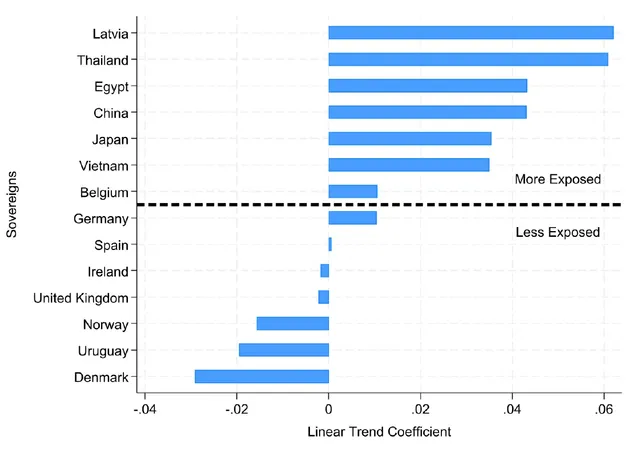
Do sovereign credit markets price the risk of coastal flooding? I show that medium- and long-term credit default swap spreads rise for countries with large populations exposed to coastal flooding when climate news arrives, but the market incorporates changing coastal vulnerabilities only gradually — consistent with investor inattention. A real-options model examines the debt financing trade-offs of sovereign adaptation investment.

Best PhD Paper Award, Principles for Responsible Investment Academic Conference 2024

Abstract

This study examines whether the sovereign credit market incorporates expectations of coastal flooding and sea level rise (SLR). The results indicate that medium- and long-term credit default swap spreads increase for sovereigns with a substantial portion of their population vulnerable to ex-ante coastal flooding in response to news around climate summits. Predictability tests suggest that the market asynchronously incorporates changing vulnerabilities of regions into its risk assessment with such news, consistent with theories of inattention to information. A real-options model is used to consider debt financing trade-offs associated with sovereign inaction or investment into adaptation.

  • Climate Finance
  • Asset Pricing

What Do Weather Shocks Reveal? Realized Temperature Variability and Equity Returns

with Leonardo Bortolan, Luca Taschini · Working paper · Last revised: May 2026

How do U.S. equities respond to abnormal temperature variability — a localized, transitory weather shock with real consequences for firms? Sorting firms each month by realized exposure in their operating states, low-exposure firms outperform high-exposure firms by 4.8% annually. The evidence supports a cash-flow channel that investors find difficult to infer: analyst disagreement rises and earnings surprises are more negative among high-exposure firms.

Best Data-Driven Research Award 2022, Edinburgh Centre for Data, Culture & Society

Abstract

We study how US equities respond to abnormal temperature variability — a localized and transitory shock with significant firm-level consequences. Sorting US firms each month by realized exposure in their operating states, we find that low-exposure firms have contemporaneously greater returns than high-exposure firms, with a return differential of 4.8% annually. Firm-level evidence supports a cash-flow channel, as elevated variability reduces revenues and profits. Consistent with these operating consequences, household spending falls in affected consumer-facing sectors, and workers supply fewer hours. These shocks attract attention as they occur, yet their cash-flow implications are difficult for investors to infer. Analyst disagreement rises and earnings surprises are more negative among high-exposure firms.